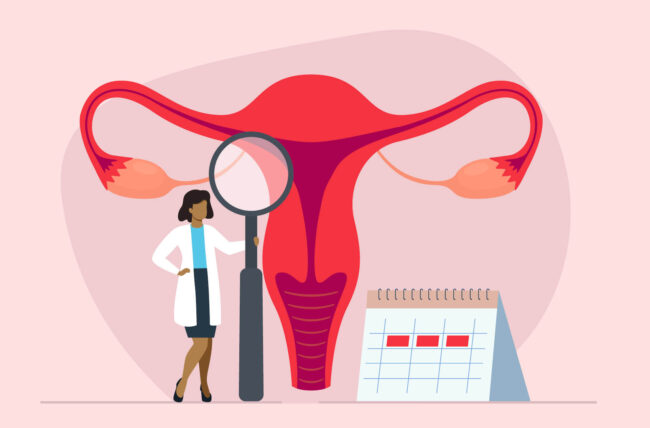
You have probably heard about womenopause. Are you familiar with the perimenopause.
If not, here’s a quick primer. Menopause can be defined as 12 months of no menstruation, while perimenopause refers to the period between five and seven years prior to menopause.
You may notice changes in your cycle because your ovaries are producing less hormones. These irregularities include:
- Cycles that are longer.
- Cycles that are shorter.
- Missed periods
- Spotting between periods.
- Heaving bleeding.
The process is complex and varies from person to person. It can be difficult to track when your period is due, which can leave you feeling frustrated and worried about the changes in your body.
Ob/Gyn Sharon Sutherland MD explains the symptoms of perimenopause, including how your menstrual cycle will change.
You can still have your period if you are perimenopausal.
Yes. irregular period is usually the first sign of perimenopause.
The majority of people reach perimenopause by their mid-40s. Some people begin perimenopause as early as mid-30s, while others may wait until mid-50s.
Your menstrual cycle may vary because of the fluctuating levels of estrogen and a progesterone in your body.
The perimenopause period is when your menstrual cycle is unpredictable. It’s a normal progression that indicates that your body prepares to enter menopause.
In general, most women will experience perimenopause around four years, although it may only last for a few short months for others. Menopause begins when you have gone 12 months without a period.
What is the perimenopause like?
What is the short answer? The short answer? You may have a longer cycle one month, and then a shorter cycle the next.
Dr. Sutherland says that the root cause of irregular periods is a less reliable ovulation. You’re not ovulating regularly every month and your period will start to change.
It is possible to miss a cycle for a few months and then resume it regularly. Your periods may fluctuate between normal, lighter or heavier.
How long do menstrual periods last during perimenopause?
There’s no one answer that fits all. Each period is different. The average menstrual period lasts between three and five days. You may have a shorter period (two or less days) or your period will become longer (eight or more days).
will also change when is used with a period.
Dr. Sutherland says that the timing of one period and the next is likely to vary. Some people get two periods per month and then stop. For most people, their periods will begin to spread out. “So, they may have a break every two or three months. Maybe eventually, it will be six months.”
You can go from 12 periods per year to 8 periods and then 4 periods. Over time you’ll just see them less often.
Are PMS symptoms more severe during perimenopause?
According to Dr. Sutherland, they can.
You may have symptoms similar to those you had in your teens due to hormonal fluctuations. You may also experience symptoms similar to menopause.
The following symptoms can occur:
- Cramps.
- Breast Tenderness.
- Headaches.
- Fatigue.
- Hot flashes
- Vaginal Dryness.
- Urinate more often.
- Sleeping problems.
- Changes in mood such as irritability and depression.
In some cases symptoms may not be present.
Dr. Sutherland says that if you’re not ovulating you might not experience the usual PMS symptoms such as breast tenderness and cramping. You may not have any warning before your period, but you suddenly begin to bleed.
There are some things you can do to reduce the symptoms of perimenopause at home. You can, for example:
- Consume a balanced diet.
- Exercise includes weight-bearing exercises like walking, hiking, and strength training.
- Stop smoking.
- Sleep hygiene is important.
- Limit caffeine and alcohol.
- Maintain a healthy body weight.
- Use stress management techniques such as meditation and deep breathing.
When to visit a doctor
It’s normal to expect changes in your menstrual cycles when you reach perimenopause. However, you should still consult a physician if you have any concerns.
The abnormal bleeding can also be caused by other conditions such as uterine fibroid and pregnancy or birth control pills. If you notice any of the following, it’s time to consult your doctor.
- Heavy blood flow
- Blood Clots.
- Spotting right after your period.
- Spotting after sex.
- Closely spaced periods.
“If you are experiencing symptoms that interfere with your daily life, then it is important to speak with your doctor,” says Dr. Sutherland.